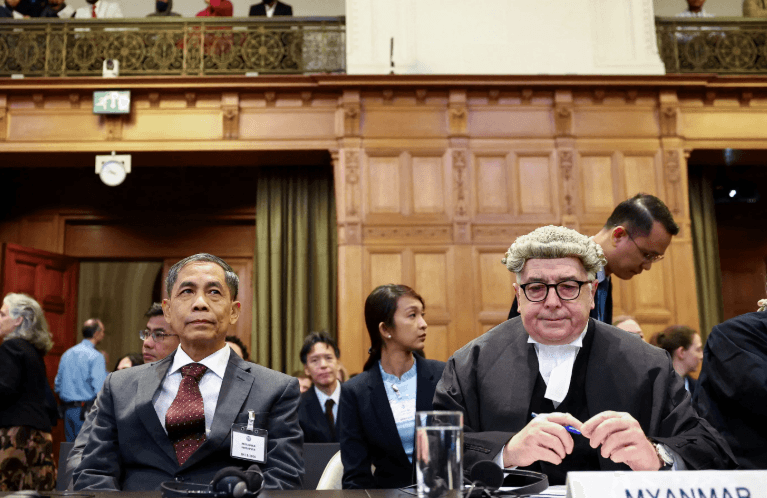
The World Court Finds Myanmar Committed Genocide Against the Rohingya
Can a court ruling bring justice nine years later? Survivors and rights groups hope so after Thursday's judgment by the International Court of Justice in The Hague.
In a case The Gambia brought back in 2019, the court found that Myanmar committed genocide against the Rohingya during the military's 2017 "clearance operations" in northern Rakhine State. The vote was 9 to 6. The judges concluded that state forces carried out killings, caused serious physical and mental harm, and imposed measures meant to prevent births, and that the only reasonable explanation for it all was intent to destroy the group. Myanmar was also found responsible for failing to prevent and punish genocide and for ignoring a 2020 court order to preserve evidence. The court did not find that Myanmar directly incited private individuals.
The numbers behind the case are staggering. At least 10,000 Rohingya were killed, more than 1,800 acts of rape were documented, and around 700,000 people fled into Bangladesh. Amnesty International estimates that about 1.3 million Rohingya refugees live there today.
The court ordered Myanmar to stop any ongoing violations, investigate and prosecute those responsible, allow a safe and voluntary return home, and pay compensation, with the amount to be settled later. Myanmar has two years to report back on what it has done. Amnesty's Agnès Callamard called it "a rare moment of justice," and Amnesty says it's the first time the ICJ has found a state responsible for genocide under the convention.
The big catch is that the court can't arrest anyone, and this case is about the state, not individual generals. So will this ruling actually change anything on the ground, or is it mostly symbolic?