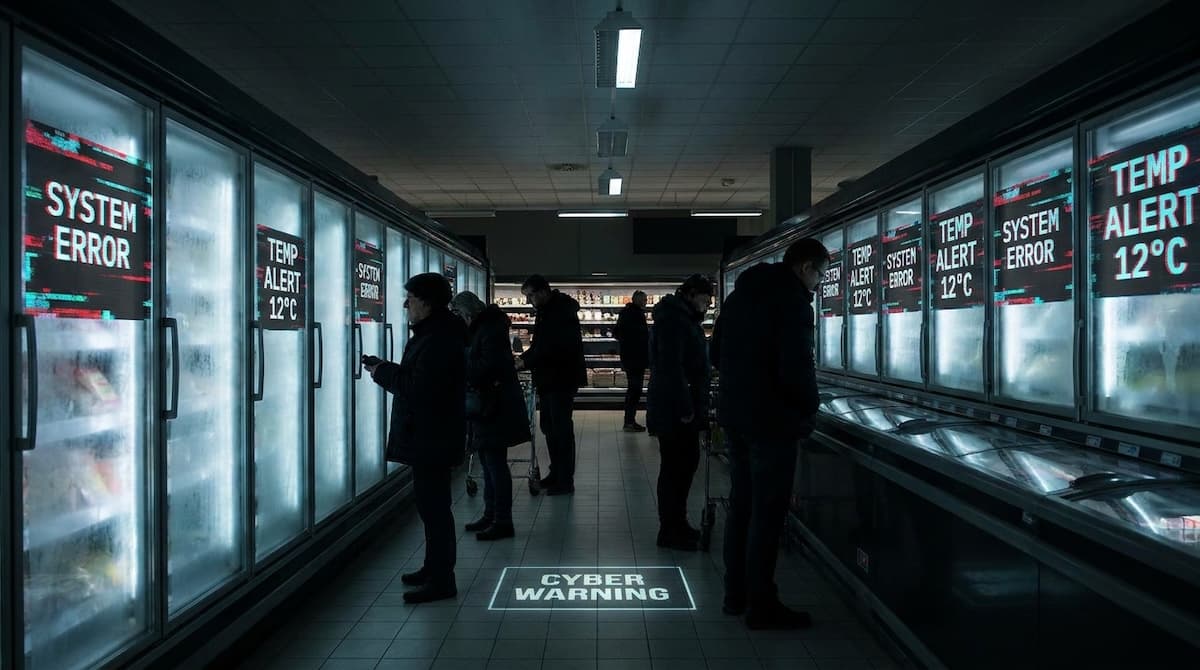
This one sounds like a movie plot. Hackers have been tampering with refrigeration controls in supermarkets, and a fresh round of suspected attacks reportedly hit stores in seven European countries after Monday’s incidents. Some freezers reportedly climbed to 50°C (122°F). No group has claimed responsibility.
It follows October’s attack in France, where about 700 of the country’s 10,000 supermarkets were affected, including hundreds of Intermarché and Netto stores. France’s finance minister said it “touches the heart of our food security,” though supplies weren’t at risk. Hackers reportedly forced nonstop defrost cycles, and some stores had to throw out food. Dutch grocer Ahold Delhaize also took systems and websites offline, including Stop & Shop and Food Lion in the US.
French investigators pointed to compromised remote-control modules from Danfoss and Copeland. Most affected units were older, out-of-support products. Security firm Claroty had flagged vulnerabilities in August, and both companies had since patched them. According to the latest briefing, vulnerable systems online fell from roughly 5,000 to about 1,000 after Monday’s incidents. Notably, there’s no ransom demand and no data theft, which experts called unusual. That raises the question of what the goal actually is.
The takeaway is uncomfortable. Everyday infrastructure like fridges is old, internet-connected and rarely updated.