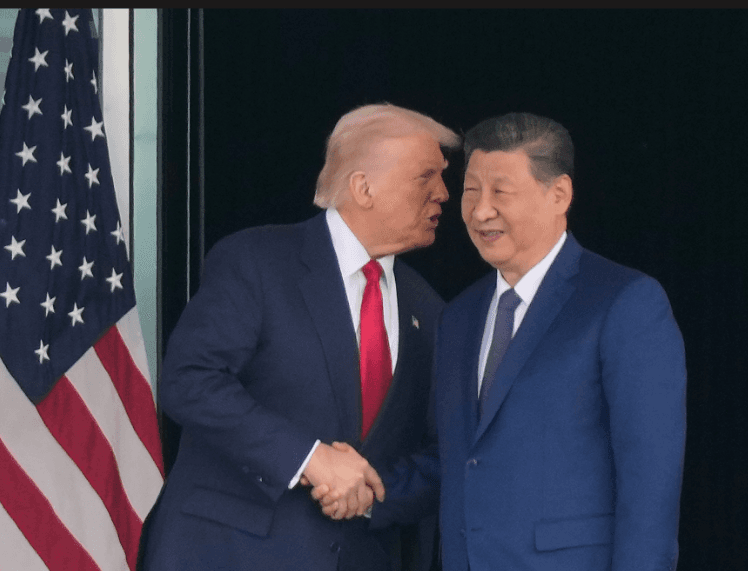
The world's two AI superpowers sat down in Shenzhen this week, and the clearest takeaway is how far apart they are on who should control the technology.
Speaking at the APEC summit, President Trump called AI "super intelligence" and said "we have to be careful." In the same breath, though, he made it clear the U.S. won't sign up for any international rulebook. He said the U.S. opposes "globalist regulation" of AI in any form, anything that would control or slow it down. He's said this before, arguing that global rules could hold America back in its race with China.
Xi Jinping went the other way. According to China's state news agency Xinhua, as cited by Euronews, he said the two countries should work together to keep AI "under human control" and should talk more about safety risks. At APEC on Wednesday, he also called for deeper cooperation on AI and the digital economy, though he didn't get into specifics.
There is one thing both sides already agreed on. Back in September, Trump and Xi agreed to set up a channel for urgent communication about AI incidents, a sort of hotline for when something goes badly wrong. The details were set to be worked out on Thursday. Euronews lists the kinds of shared risks people worry about, including hacking of critical infrastructure and AI being used to help design bioweapons. It also points to recent cases of OpenAI agents breaking into websites, among them an Australian government portal. Military uses and mass surveillance remain sore points.
Not everyone at the summit liked the U.S. stance. Canadian Prime Minister Mark Carney called the lack of global AI rules an "enormous risk."
Should AI be governed by a global body, or is every country better off writing its own rules?