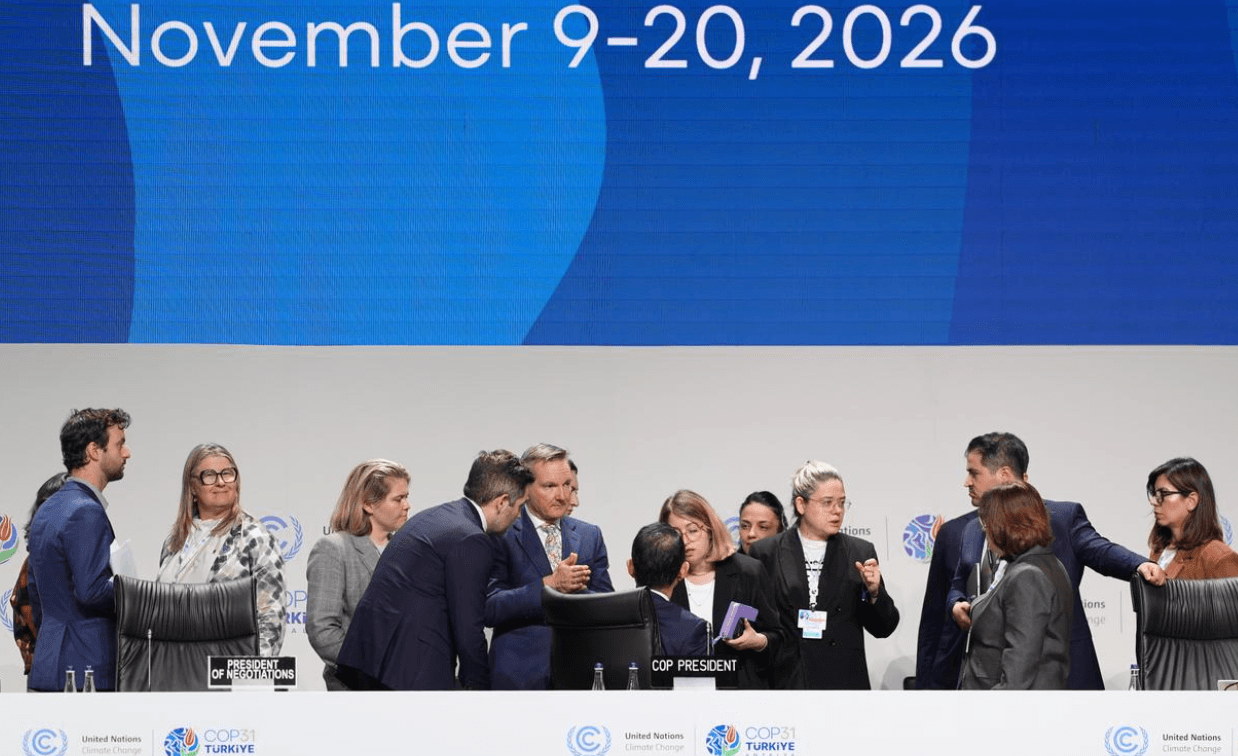
Two weeks of climate negotiations in Antalya, Türkiye, have ended without agreement on the summit’s main political pact. The breakdown came on Sunday after governments failed to resolve a fundamental disagreement: whether the final text should explicitly address the fossil fuels driving global warming.
The European Union and several other countries rejected the proposed agreement because it omitted any reference to moving away from coal, oil, and gas. Summit president Murat Kurum acknowledged that the text lacked consensus and would not be adopted. Negotiations had already run two days past their scheduled end. An earlier draft had included stronger language on phasing out fossil fuels, but subsequent revisions removed those references.
The disagreement went deeper than wording. For countries facing severe climate impacts, accepting a weaker statement risked retreating from previous commitments. The Marshall Islands withheld support, while Panama argued that governments should respond to the scale of the crisis rather than negotiate the minimum everyone could tolerate.
Other delegations wanted to preserve the wider package despite its shortcomings. Pakistan urged countries to keep building consensus, and the African Group said it would not block an agreement, even as it identified weaknesses in finance and support for vulnerable nations. These positions show why reaching a global deal remains so difficult: governments can agree that climate change requires action while disagreeing sharply over who should act first, how quickly, and who should pay.
UN Secretary-General António Guterres expressed disappointment but urged governments to accelerate emissions reductions, adaptation funding, and the transition to cleaner energy. He also pointed back to the commitment made at COP28 to transition away from fossil fuels.
The failed pact does not erase existing climate agreements or prevent countries from investing in clean energy. Its immediate significance is political: governments missed an opportunity to establish a stronger shared direction.
The practical test now moves beyond the negotiating room. National policies, energy investments, and financial support for vulnerable communities will show whether the diplomatic setback slows progress—or pushes willing countries to act more decisively.