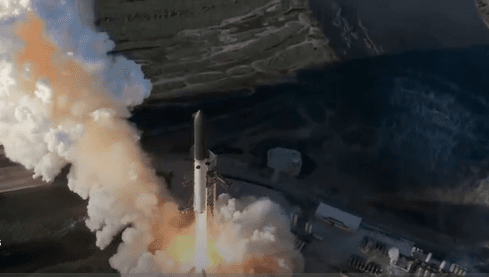
SpaceX wanted to pull off something nobody has ever done on Friday: catch both halves of Starship with the launch tower's giant "chopstick" arms. Half of that plan is already off the table, and the other half is still up in the air, literally.
The rocket lifted off from Starbase, Texas, at 5:47 p.m. Eastern on Friday. The new V3 Super Heavy booster, packing 33 Raptor 3 engines and more than 18 million pounds of thrust, did its job on the way up. Then, instead of flying back for the first-ever catch of a V3 booster, it called it off. According to TNW, citing SpaceX's Dan Huot, the booster detected a guidance and navigation problem and switched to a backup landing in the Gulf of Mexico. Space.com described a controlled splashdown, while TNW, citing Spaceflight Now, it said it exploded just before hitting the water.
The ship had a much better night. It reached orbit for only the second time ever, after Flight 14 in September, and settled at about 170 miles up. It then released 26 next-generation Starlink satellites over 42 minutes, adding roughly a terabit of network capacity.
Now comes the part everyone's waiting for. The ship is set to spend more than 21 hours in space, then return to Starbase on Saturday at around 4:17 p.m. Eastern for the first tower catch of a Starship upper stage. SpaceX says it'll only try if the flight team is sure the systems needed for reentry, the landing burn, and the tower approach are healthy. If not, it'll splash down in the Gulf instead.
Elon Musk has talked about 10,000 Starship launches a year by 2030. Catching ships and boosters like this is the only way numbers like that make any sense.