A European Startup Is Betting €124 Million That Short-Haul Electric Flights Can Work
Munich-based aviation startup VÆRIDION has announced more than €124 million in combined equity funding and EU grant support to develop its all-electric regional aircraft, the Microliner. The news is notable because electric aviation has often sounded futuristic; VÆRIDION is positioning its plan around the much less glamorous—but essential—work of certification, manufacturing, and regional economics.
The company closed a €30 million Series A2 round led by SHIFT Invest and Invest-NL, with participation from World Fund, Project A, Vsquared Ventures, and others. It was also selected for a €94.5 million European Commission Innovation Fund grant for its CAROLUS project. The grant still requires a formal agreement expected in 2027, but the combined announcements give the startup significant momentum.
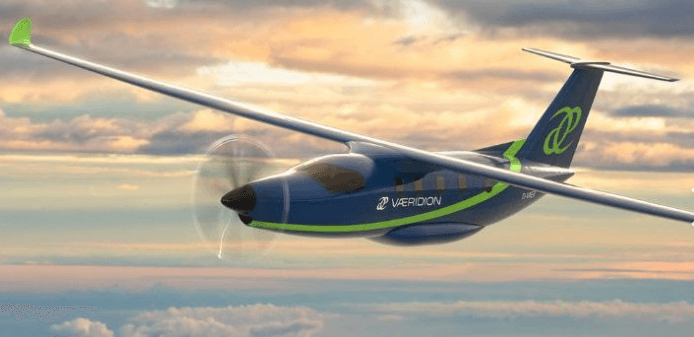
VÆRIDION’s Microliner is intended to carry nine passengers on regional routes. The company is targeting a 400-kilometer range under instrument-flight conditions and says the aircraft could also serve cargo operations. Its design combines a glider-inspired wing, modular batteries, and a multi-engine, single-propeller setup. The startup says it is working toward zero-emission regional service by 2030.
What makes the concept interesting is the market it is chasing. Short regional routes have become harder to operate as fuel and maintenance costs rise. VÆRIDION says more than 21,000 small turboprop aircraft are currently active worldwide, with an average age of 23 years, while Europe has lost around 120 regional routes in the five years before June 2026. If an electric aircraft can operate economically from smaller airfields, it could reconnect places that are poorly served by both rail and conventional airlines.
The company says it already has commitments for more than 130 aircraft, valued at more than €730 million, with ASL Group as a launch customer. Those commitments are not the same as completed sales, but they show that operators are paying attention.
For startups, this is a useful reminder that climate technology succeeds or fails on deployment, not just invention. VÆRIDION now has to prove battery performance, safety, certification readiness, production capacity, and operating costs. The technology may be exciting, but the real challenge is convincing airlines that electric regional flying can be reliable enough for schedules and affordable enough for passengers.