Spotify gives all artists a way to remove fake and misplaced releases from their profiles
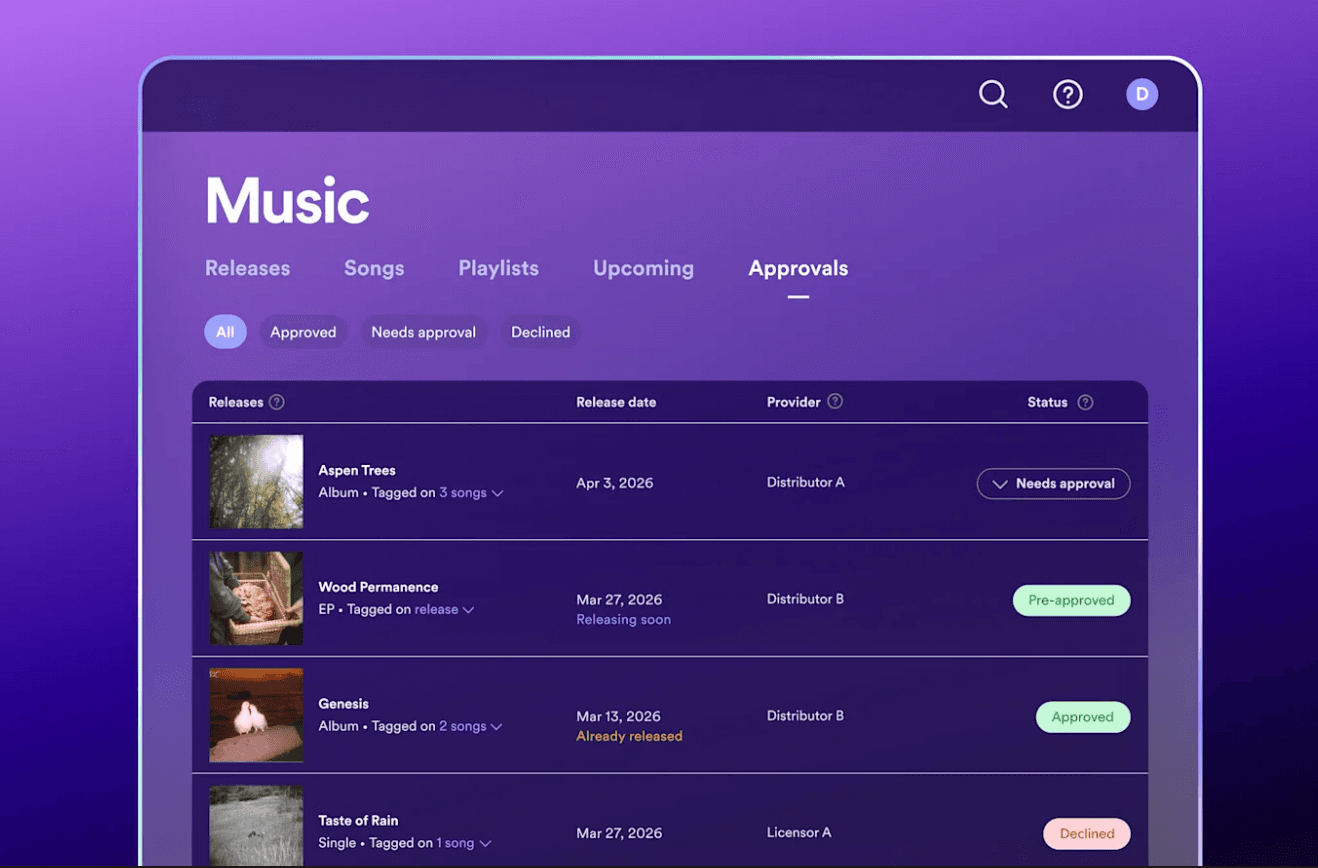
Spotify has expanded Artist Profile Protection to all artists on its platform, letting musicians review releases delivered under their names and remove themselves from music that belongs to someone else. The feature addresses both deliberate impersonation and ordinary catalog errors, including releases assigned to an artist with the same name. Spotify says the growing availability of AI-generated music has made the problem more difficult.
Artists can activate the optional feature through Spotify for Artists. Once enabled, it sends an email when new music arrives with their name attached. They can then review eligible releases and decline the incorrect association. Spotify says a declined release will no longer appear on that artist’s profile, contribute to their statistics or enter recommendations to their listeners.
The default setting still requires artists or their teams to pay attention. Music goes live on schedule if they take no action. Music Business Worldwide reports that artists have up to 28 days after release to act. It also describes an advanced approval setting being tested with a limited group, where releases require approval before the artist is listed. Access to that stricter option should therefore be checked separately.
The consequences of a misplaced track can extend beyond an untidy profile. A fan may assume an artist has released a new song, judge it as part of their work and receive further recommendations shaped by that association. For an independent musician managing releases personally, discovering the error can also mean spending time contacting a distributor and chasing corrections.
Giving the artist a direct review step makes that process easier to manage. It places someone who knows the catalog near the point where an incorrect release becomes part of the public profile. The notification can be particularly valuable for artists who release infrequently and might otherwise have little reason to check their pages every day.
The rollout also shows how identity management is becoming part of music distribution. As creating and uploading tracks becomes easier, platforms have to decide who can associate a release with an existing artist. Spotify’s new controls give musicians a more active role in making that decision